Wednesday, August 7, 2013

CORRUPTED POLITICIANS OF PAKISTAN

Top Five Corrupt Politicians of Pakistan


There are many names in the Pakistan's political history who devoted their life and everything to this country and its people. They include such as Quaid-e-Azam Muhammad Ali Jinnah, Allama Iqbal and Nawabzada Liaqat Ali Khan and Zulifqar Ali Bhutto just to name a few. 

Bu there are the ones who harmed the insterests of Pakistan in any way they can. In this post I am going to list those  politicians who are considered the most corrupt  politicians of Pakistan
1.Asif Ali Zardari
Unfortuantely, Asif Zardari is currently the Preseident of Pakistan. He is the co-chairperson of Pakistan People's Party. Since his party i.e PPP has come into power, Pakistan has lost a huge amount more than Rs 8.5 trillion ($94 billion) in corruption, tax evasion, bad governance during the last four years. He is called "Mr 10 Percent" for his corruption that he did in over two decades. He had also been arrested in  on corruption charges, extortion and kidnapping in 90's. Systematic corruption is prevalent from top to bottom in the government of Asif Ali Zardai.


2.Yusuf Raza Gilani
This man is student of Asif Ali Zardari.  Former Prime Minister of Pakistan, Yusuf Raza left no stone unturned to accumulate wealth for his sons Musa and Abdul Qadir Gilani ( they are also involved in a scandal) . He used to wear 15 lac worth of suits and coats in his incompetent premiership and proudly acknowledged that these coats and suits have been gifted to him by his friends. Supreme Court of Pakistan disqualified Yusuf Raza Gilani on charges of contempt. He denied writing a letter to Swiss authorites to reopen graft cases against Asif Zardari.


3.Nawaz Sharif
Head of Pakistan Muslim League (N) party, Nawaz Sharif is former premier of Pakistan. He is alleged to have been involved in money laundering and corruption in his tenure. He took billions of rupees loans from National and commercials banks of  Pakistan and never repaid the loans. 


4.Shahbaz Sharif
Shahbaz Sharif is presently chief minister of Punjab province. He is the younger brother of Nawaz Sharif. Sharif was involved in  failed "Sasti Roti" and yellow cabs schemes for which billion of rupees were wasted and no relief was passed on to poor people of Punjab. Both the brothers  never pay the taxes while they are the owner of biggest mills and factories of Punjab.


5.Pervaiz Musharraf

Pervaiz Musharraf is the former President of Pakistan. Though he took many steps to bring stability to Pakistan's economy but his presidency was marred with many corruption scandals . One of them related to PSMC (Pakistan Steel Mill)  He and his government were involved in the privatization of Pakistan Steel Mill Corporation from which they extorted money for their own interest . 


WORLD MAP OF CORRUPTED COUNTRIES


CORRUPTED POLITICIANS OF INDIA

Ten Most Corrupt Indian Politicians

While everyone has been animatedly supporting Anna Hazare's fight against corruption, people seem to have forgotten who the people are who actually led to this situation.
The peak of irony was when Anna was, allegedly, lodged in the same jail that housed the people who were responsible for two of the biggest scams in the country ever. How must the authorities have felt when they saw Raja and Kalmadi fill their plates while Anna was on a fast because of their misdeeds?
Corruption has become an unavoidable part of politics and every now and then, one or the other politician re-affirms this fact.
Here is our pick of the 10 most corrupt politicians of India.

Suresh Kalmadi

Suresh Kalmadi, almost single handedly caused a loss of hundreds of crores of rupees to the country. The Commonwealth Games, organized by Kalmadi was no less than a loot with numerous reports of the magnum opus event being soaked in corruption making headlines way before the Games had even started. Apparently, out of Rs. 70000 crores spent on the Games, only half of the amount was actually spent. Owing to his involvement in the scam, Kalmadi was charged with corruption and sent to Tihar jail.

A. Raja

A scam worth Rs. 176,000 crore had former Union Cabinet Minister for Communications and Information Technology, Andimuthu Raja at the centre. A. Raja as he is generally called, was the prime accused in the 2G spectrum scam, which was the largest that the country had seen in a long time. Following the shocking exposure, Raja was indicted and forced to resign. Presently, he is too has been lodged at the Tihar jail and is awaiting his trial.

Mayawati

Mayawati has always been criticized for ostentatious display of power in her state. She has allegedly used her status as chief minister to amass large amounts of personal wealth. She was charged with corruption when the Taj Heritage Corridor Case was uncovered. Mayawati's birthdays have always been media events, where she usually appears decked in diamond jewellery and also accepts public donations for which, she often comes under fire. Her assets are worth millions of dollars and in the year 2007-08, she had paid an income tax of Rs. 26 crores, which placed her amongst the top 20 taxpayers of the year.

Lalu Prasad Yadav

The fact that Lalu Prasad Yadav has been an accused in 63-odd cases serves for the fact that Lalu stands as one of the strongest competitor in the list. The biggest scam that rocked Lalu's political career was the fodder scam which involved the embezzlement of Rs. 950 crore approximately. The accusation of nepotism against him has come up time and again but hardly any action has been taken against him owing to his 'connections' in the government.

Madhu Koda

Former Jharkand Chief Minister, and only the third independent legislator to assume the office of chief minister in India, Madhu Koda was responsible for a scam worth over Rs. 4000 crore. The man exploited the state's natural resources by licensing illegal mining leases and stashing away the wealth amassed during the undertaking. Furthermore, the Maoists received a 30% share of the booty. Koda was arrested on charges of money laundering and is still in prison following the rejection of numerous bail applications.

Mulayam Singh Yadav

Mulayam Singh Yadav is also known as one of the most corrupt ministers in the country despite not being directly involved in any major scams. Apart from his name being involved in appointments of tainted officers and mishandling of his power as chief minister, Mulayam Singh had one major allegation levelled against him– accumulation of disproportionate assets. The case drew limelight on his sons and daughter-in-law as they too were holders of the assests that amounted to crores of rupees.

Karunanidhi

The corruptions charges against M. Karunanidhi are so many that he is often referred to as the king or emperor of corruption. He was accused of lending support to the LTTE and was indicted for abetting the LTTE in the interim report which oversaw the investigation into Rajiv Gandhi's assassination.
Karunanidhi reportedly institutionalized corruption in the South. He was a leading player in the cash for votes scams that are common in the southern region, as well as notorious foe extreme nepotism shown under his rule. Not so surprising, is the fact that the main accused in the 2G scam, A, Raja, considers him to be his mentor.

Sharad Pawar

Very few people can miss the cosy relationship that Sharad Pawar shares with power and money.Every now and then, Pawar draws flak for alleged investments made by him and his family in various illegal projects. He was named by Abdul Karim Telgi, during a narcoanalysis test, stating that it was Pawar's brainchild to print fake stamp papers across the country and mint money. He was also accused in a multi-crore scam involving wheat imports and institutions headed by him and his close associates were served notices by the Bombay High Court for showing favoritism to his family.

Jayalalithaa

The Chief Minister of Tamil Nadu has a staggering 46 corruption cases against her. Amongst the various scams were the Rs. 70 million coal import scam, Tansi land deal case, case of disproportionate assets and colour TV case, amongst many others. A raid in her residence and business establishments led to the seizure of some 28 kg of jewellery (worth Rs 51 crore), 91 wrist-watches, 41 air-conditioners, 10,500 sarees, 750 pairs of footwears, etc. She along with her former cabinet colleagues and senior bureaucrats who worked with her are still facing investigation with regard to corruption.

BS Yeddyurappa

The most recent politician http://www.mensxp.com/special-features/top-10/5458-meet-the-top-10-young-politicians-of-india.html to be caught in the web of corruption is former Chief Minister of Karnataka, B. S. Yeddyurappa. While he has a number of corruption lying against him, the one that toppled his career was his alleged involvement in the illegal iron ore export scam in districts of Karnataka. A lot of blame game followed and ended up with Yeddyurappa losing his ministerial post last month. Despite his denial, his image as one of the most corrupt politicians of the country will not fade anytime soon.


CORRUPTED POLITICIANS OF U.S.A.

Ten Most Corrupt Politicians Of U.S.A. 
Boss Tweed  
                                                                                                                                                              

The American symbol of inner-city political corruption, William “Boss” Tweed brilliantly mastered the form of aiding his constituents and business partners in return for votes, money and power. Tweed, a Democrat, served as a member of and eventually headed New York’s Tammany Hall amidst heavy war profiteering during the Civil War. He was elected to the U.S. House of Representatives in 1852, the New York City Board of Advisers four years later, and the New York State Senate in 1867.
The city’s debts jumped about $100 million dollars in just two years from 1868 to 1870. Tweed was convicted in 1873 for his role in a corruption ring that stole at least $1 billion in today’s dollars and given a 12-year sentence. Tweed was released a year later however after his prison term was reduced, though he was immediately rearrested, as the city sued him for $6 million. Tweed escaped and fled to Spain where he was arrested and sent back to New York City. Tweed died in prison from pneumonia in 1878. Many, including Tweed himself, believed that despite his crooked ways he did a lot of good for the city, especially for the poor.
Ray Blanton
A former member of the Tennessee House of Representatives, Blanton was elected Governor in 1975. He came under significant pressure after he pardoned a convicted double murderer whose father was later found to be a county chairman for Blanton. With the unlikelihood of winning reelection, Blanton, a Democrat, decided not to run, and Republican Lamar Alexander was elected his successor. Near the end of his term, three state employees -- two from Blanton’s office --were charged by the FBI with extortion and conspiracy to sell pardons, paroles and commutations.
Blanton’s most serious acts of corruption occurred just shortly before his term was to expire as pardons were delivered for 24 convicted murderers and 28 prisoners of other crimes in what many believed were performed in exchange for money. To stop Blanton’s pardon spree, the Lieutenant Governor and State House Speaker claimed the state constitution was unspecific as to when a newly elected Governor must be sworn in. As a result, Alexander was sworn in three days before his scheduled inauguration to get Blanton out before he could pardon anyone else.
Fred Thompson became famous when in 1977 he represented Marie Ragghianti who had tried to inform authorities of the corruption taking place while she served as chairwoman of the state’s Pardons and Paroles Board. She was fired by Blanton but sued for reinstatement and won. The story was made into a book and later a film (“Marie”), in which Thompson played himself, launching his movie career.
Budd Dwyer
 
A Republican politician from Pennsylvania, Budd Dwyer was a member of the state House of Representatives from 1965 to 1970 and spent the following decade in the state Senate. Dwyer was then elected state Treasurer -- the post he held until committing suicide.
On January 22, 1987, Dwyer was one day away from a federal court sentencing hearing after a jury found him guilty of taking $300,000 in campaign donations from a computer company in a quid pro quo exchange for a $4 million state contract. Dwyer was also accused of five counts of mail fraud, four counts of inter-state transportation in aiding racketeering and one count of conspiracy to commit bribery. Dwyer faced a maximum of 55 years in prison and a $300,000 fine.
At a press conference the morning of January 22, with TV cameras rolling and reporters watching, Dwyer pulled out a loaded .357 Magnum from a manila envelope and took his own life.
Edwin Edwards
Edwin Edwards served four terms as Democratic governor of Louisiana in a time span ranging from 1972 to 1996. The New Orleans Times-Picayune recently described Edwards as such: “He was a swashbuckling figure of engaging charm and dubious ethics whom critics blame for cementing the popular national image of Louisiana as a captivating but corrupt backwater, the province of rogues and scoundrels.”
Despite accusations of impropriety beginning early in his career -- a former associate claimed he was involved in several corrupt practices, including the sale of Louisiana agency posts; and he was accused of accepting money from a South Korean rice broker while serving in the U.S. House -- his political career continued.
Then in 1997, FBI agents raided his house and seized records and more than $400,000 in cash. The FBI had monitored over 1,500 hours of telephone conversations, and Edwards was charged for his involvement in extorting payments from businessmen -- including San Francisco 49ers owner Edward Debartolo Jr. -- in return for riverboat casino licenses.
In 1998 Edwards was indicted by the federal government and found guilty on 17 of 26 counts of extortion, fraud, racketeering, and conspiracy. Edwards, now 80, had been seeking a pardon or sentence commutation by President Bush.
Spiro Agnew
Republican Spiro Agnew served as Vice President under President Richard Nixon from January 1969 until his resignation in October 1973 due to issues unrelated to the Watergate scandal. He was the second United States vice president to resign from office, following only John Calhoun, who did so in 1832. Agnew was a crusader for what became known as “The Silent Majority,” which the administration depicted as patriotic, conservative, middle-class Americans opposed to the counterculture events of the time. He was often used as Nixon’s voice in the public to attack the media, war protestors and the administration’s opponents in colorful, bombastic ways.
After Nixon won re-election, Agnew was targeted by a U.S. Attorney investigation for tax fraud, bribery, extortion and conspiracy related to his earlier political career in Maryland. He was formally charged with accepting bribes of more than $100,000. Agnew decided not to face trial and resigned, entering a plea of no contest to charges of evading income taxes. Agnew was given three years probation and fined $10,000. In 1981, a civil court revealed that Agnew had in fact accepted the sum of $147,000 in bribes while governor of Maryland. He received $17,500 of the cash while he was serving as Vice President. Agnew was forced to reimburse the state $268,000.
Carroll Hubbard
Carroll Hubbard served in the Kentucky Senate from 1968 to 1974 before winning election to the U.S. House of Representatives in the state's 1st District. After a failed bid for Governor in 1979, Hubbard, a Democrat, was re-elected to the House six more times before being defeated in the 1992 primary.
Hubbard was indicted for misusing government property and personnel as part of the 1992 Rubbergate House Banking Scandal, in which House members were found to have overdrawn their House checking accounts. Hubbard's wife was also put on probation for five years for illegally using the congressman's aides for her own failed run for Congress.
To lessen his punishment, Hubbard worked as an FBI informant with the name "Elmer Fudd" although he ultimately proved useless to the agency. In 1993 Hubbard complained about this job to the Washington Post and certain news programs. The following year he pled guilty to three felony charges of violating federal campaign spending rules, conversion of federal property, theft and obstruction of justice. He was sentenced to three years in federal prison in Fort Worth, Texas and fined $153,794.
In 2005 Hubbard ran for office in the Kentucky Senate, losing by only 58 votes. He lost again in 2008.
George Ryan
Ryan served as the Republican Governor of Illinois from 1999 until 2003. Investigations into Ryan began in 1994 when he was serving as Illinois Secretary of State in what would become known as the license-for-bribes scandal. That year, an explosive car accident in Milwaukee killed six and left their two parents significantly burned. An investigation found that the driver, who did not speak English, had possibly used a bribe to receive his license. An investigation began into the sale of drivers licenses for money, though Ryan tried to stop it from proceeding. An eight-year investigation would reveal that the secretary of state’s office had given licenses to unqualified truck drivers for bribes.
In 2003, Ryan’s ex-chief of staff and campaign manager was convicted of racketeering and fraud. In Decemeber of that year Ryan was indicted along with lobbyist Lawrence Warner on 22 counts including racketeering, bribery, money laundering, extortion, and tax fraud. Ryan was accused of forwarding numerous state contracts to Warner and other associates, taking campaign funds for personal use, and obstructing justice in trying to stop inquiries into the license-for-bribes scandal. Ryan's trial began in late 2005 and in April 2006 he was found guilty by a jury on all counts. Ryan appealed the verdict but in September of that year he was sentenced to six and a half years in prison. He is scheduled for release on July 4, 2013.
James Traficant
A nine-term Democrat from Ohio serving from 1985 to 2002, Traficant was known as a colorful, unconventional congressman willing to say whatever was on his mind. In a 420-1 vote in 2002, Traficant was kicked out of Congress a week after the House Committee of Standards of Official Conduct had recommended it be done. Traficant was only the second member of the House to be removed since the Civil War. Rep. Michael Myers was the other, expelled in 1980 after a conviction for taking bribes.
Traficant had been convicted of 10 felonies involving bribery, tax evasion and racketeering. Charges ranged from filing false tax returns to making his aides work at his Ohio farm. He was defiant until the end, claiming he was unfairly targeted by federal prosecutors, outlining what he said were problems with the prosecution’s case against him and lies told by witnesses. Traficant claimed the government sought to get back at him after he was acquitted of bribery charges in 1983 when he was the sheriff of Mahoning County, Ohio. In his final speech he stated, “I’ll go to jail before I resign and admit to something I didn’t do.”
Traficant is currently serving out his eight-year prison sentence and is expected to be released in September 2009.
Randy "Duke" Cunningham
Cunningham, a decorated Navy fighter pilot during the Vietnam War, represented San Diego as a Republican in the U.S. House from 1991 to 2005, when he resigned from Congress in disgrace. His story is best told in the book, “The Wrong Stuff: The Extraordinary Tale of Randy ‘Duke’ Cunningham, the Most Corrupt Congressman Ever Caught,” written by the Copley News Service reporters who helped expose him.
The Cunningham sat on the powerful House subcommittee that designates spending to certain defense programs, and he resigned from Congress in November 2005 after pleading guilty to bribery. He admitted taking bribes of at least $2.4 million -- the highest known amount a congressman has ever taken -- from at least three defense contractors in exchange for government business.
Cunningham had used the bribes to make extravagant purchases such as a yacht, Roll Royce, suburban-D.C. condominium and a mansion. On March 3, 2006, Cunningham was sentenced to eight years in federal prison and ordered to pay $1.8 million in restitution.
Huey Long
Known as Louisiana’s “Kingfish”, a name he gave himself, Democrat Huey Long served as Governor from 1928 to 1932, during which he pushed through a public works program of unprecedented scale. To do so he used extensive political patronage and almost any means he could, including threats and buying votes to beat back wealthy, entrenched opposition. Long was elected to the U.S. Senate in 1930 but did not take office until the end of his gubernatorial term two years later.
In 1929 Long sought to increase taxes on the production of oil but was confronted by strong opposition in the state Congress. Impeachment of Long was sought on charges of corruption, bribery and gross misconduct. The state House passed numerous charges against him but Long succeeded in getting one third of the Senate to sign a document saying they would vote against any charge regardless of the evidence, thus preventing the two-thirds majority required. Those who signed the document were later given state jobs, cash, or other rewards.
Long was known to intimidate his opponents by firing their relatives from state jobs. He sought to establish a tax on newspapers to forbid them from publishing material he deemed slanderous. In 1934 Long sought further control of Louisiana state government by nearly eliminating local government, giving himself the power to choose all state employees.
Long was shot in the Louisiana Capitol in September 1935 -- one month after announcing his candidacy for president.

Tuesday, August 6, 2013

LIST OF CORRUPTED COUNTRIES AROUND THE WORLD

India is the 94th 'most corrupt country' in the world for doing businesses, a new survey has revealed.
According to the 2012 Corruption Perceptions Index, created by Transparency International, India was ranked 94th, a step up from last year's ranking, while Russia was 133rd, 10 places higher than 2011.
The survey showed Denmark, Finland, New Zealand, Sweden and Singapore topping the list as the 'cleanest countries' to do business in the world, CNN reports.
According to the report, Somalia, North Korea, Afghanistan, Sudan and Myanmar ranked at the bottom of the list.
The United States was ranked 19th in the world, below Japan and the UK and ahead of Chile and Uruguay, the survey noted.
The survey also noted that while China has become the world's second largest economy, doing business in that country is now perceived to be more corrupt, as it dropped five spots to 80th place out of 176 countries surveyed in the 2012 Corruption Perceptions Index.
In Europe, Greece, whose ailing economy faces tough austerity measures to meet international standards to get bailout cash, plummeted to 94th place on the list, down from the 80th spot last year, the survey added. 
Haiti ranks 165 out of 174 countries and earned a score of 19 out of 100.
Haiti was struck by a massive earthquake in 2010, but the 2 billion dollars that came into Haiti as funds for the people inflicted by the earthquake was consumed by the rampant corruption practiced by the bureaucracy.

The 2011 Human Rights Report by the U.S. State Department found that corruption “remained widespread in all branches and at all levels of government” even after Haiti elected a new president in 2011. “In this country everything is money,” Chairman of the Port-au-Prince Bar Association Stanley Gaston said. “There isn’t value in any other thing. 
Haiti’s CPI score is 1.8 (ranked 175th), and they are plagued by the rampant corruption of the impenetrable bureaucracy.  
In September 2011, a renowned Iraqi journalist was murdered in his home because he was accused of leading anti government protests. 
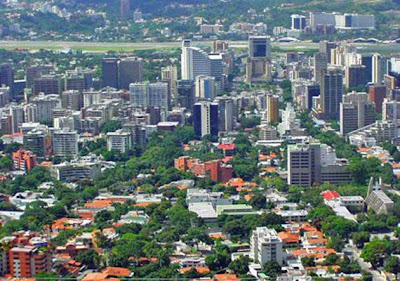
Venezuela ranks 165 out of 174 countries and earned a score of 19 out of 100.
Venezuela has earned a CPI score of 1.9 and are ranked 172nd out of 182 countries of the world. The event that kicked off the country’s slide in to corruption was the discovery of vast amounts of oil and by the time the ’70s decade arrived, the Venezuelans had started calling the petroleum being mined as ”the Devil’s excrement”. 

Hugo Chavez came by in 1999 promising to remove corruption but did nothing to even slow it down as his movement was accused of the same ills as the movement before him; ills such as political patronage, cronyism, and of course, corruption. 

In Venezuela, even the police, the department appointed to protect the law, are notorious for their corruption and bribery.


Iraq ranks 169 out of 174 countries and earned a score of 18 out of 100. 
During the Saddam regime, the corruption was so rampant that anyone that so much as lifted a finger against the government was immediately captured and brutally murdered. Saddam and his son were quite infamous for their brutality and corruption. 

“Millions of dollars are being stolen, and some of this money is going to terrorist groups,” a former political exile told the BBC in 2009. “The government cannot win the war against the insurgency if it does not fight corruption first. And the war against corruption is much harder to win.”

Their CPI score is 1.8 and are ranked 175th.


Sudan ranks 173 out of 174 countries and earned a score of 13 out of 100.Sudan gets millions of dollars in aid for development to start the rebuilding process that has become a necessity in the country ravaged by years of war. 

But the aid funds seldom (read: almost never) go to the purposes of development and instead end up in private hands of the government officials and their foreign banks.

South Sudan produces half a million barrels per day, and the $10 billion in oil revenues collected since 2005 has funded nearly 98 percent of the government’s budget. But it has lost more than $4 billion due to public sector corruption since gaining self-rule in ’05.

Since the country gained self rule in 2005, no effort has been put into prosecuting the officials responsible for corruption despite a commission being set up for just this job. Sudan’s CPI score is 1.6 and are ranked at 177th.

Turkmenistan ranks 170 out of 174 countries and earned a score of 17 out of 100.
Turkmenistan spent 69 years under the Soviet Union and their time with the Soviets has left its effects on the government. 

Though the country declared independence in 1991, the totalitarian rule of the Soviets left its imprint and has led to a totalitarian control by the government of Turkmenistan. 

The people suffer intense human rights violations and face severe restrictions whenever they try leaving the country. It has the world’s third worst freedom of the press, and is the tenth most censored country in the world. Turkmenistan has a CPI of 1.6 and are ranked at 177.  


Uzbekistan ranks 170 out of 174 countries and earned a score of 17 out of 100. 
Uzbekistan is a country rich in resources, but the government does not allow for growth in the independent private sector as they keep control over all the resources. 

The government, infamous for its authoritarianism, is often called the root of all the corruption and the problems that arise as a result. 

According to a local businessman, the country’s half-hearted war on corruption reaped no results and there has been “no progress in the battle against corruption. The country and its society are corrupted through and through.” Turkmenistan’s CPI is 1.6 and its ranked at 177.


Afghanistan ranks 174 out of 174 countries and earned a score of 8 out of 10. 
Afghanistan is a state riddled with the the corruption of bribery. As recent as 2010, Afghani people paid around 2.5 billion dollars in bribes and nearly half the Afghan population had paid the country in kickbacks. 

Bribery and the menace of kickbacks are so commonplace in Afghanistan that 38 percent of the people consider it to be normal. 

Even meeting a politician, something that seems as simple as a normal talk or a handshake, involves giving kickbacks 40 percent of the time. Afghanistan’s CPI is 1.9 and is ranked 180th in the world.

Myanmar ranks 172 out of 182 countries and earned a score of 15 out of 100. 
Myanmar is rich in natural resources, a blessing that is more of a curse in this country riddled with drug rings and widespread corruption. 

In fact, these reasons have not only affected Myanmar, but has been considered the root of all problems in the Golden Triangle. 

After emerging from five decades of military rule in March 2011, Burma (Myanmar) drafted an anti-corruption law, state officials were told to repay embezzled funds and citizens were told to report bribery and corruption. But the country’s rich natural resources such as oil, timber and gems are still controlled by former military-regime insiders.

On top of all that, the country has been witness to brutal ethnic violence on a large scale and the human rights issues has had it isolated by most of the developed countries of the world. 

The country’s CPI is scored at 1.5 and is ranked 180th in the world tied with Afghanistan.


North Korea ranks 174 out of 174 countries and earned a score of 8 out of 100.
This picture shows the “great” leader of North Korea standing with his “happy” citizens having the time of their lives. Yeah, right! It is reported by the RFA that a Chinese national who snuck in and out of North Korea said, “In some places in North Korea, people are starving to death, but railway security agents wear Seiko watches and smoke [Craven A] cigarettes.” 

There is little foreign investment in North Korea, and the country is plagued by structural corruption in its political and bureaucratic system since the early 1990s when the Stalinist North Korea collapsed.

There is no reason why someone should even try going to North Korea, but even getting there requires payments of huge sums of money as bribes to officials. 

There is little that is known about North Korea, as once you’re in, you either get captured or find worse fates, or you pay huge bribes to escape, and the testimonies that shed any light on the conditions in North Korea are from the refugees who either paid bribes to escapes or snuck out some other dangerous way. The CPI score, based on what is known, is a lowly 1 and they are ranked at the second last spot, 181st.


Somalia ranks 174 out of 174 countries and earned a score of 8 out of 100.
If it weren’t for the fact that Somalia is even considered a country, some circles believe it shouldn’t be considered as such unless at least a stable shadow of a government is present, it wouldn’t even be on this list. 

The state and the officials, however they are, are so infested with the malice of corruption and brutal violence that it is ranked at the very last among the countries in the world, and by some circles, it is not even considered a country. 

The corruption and violence was sparked when the US and the USSR used Somalia as a battleground for the political ideologies and backed clans and militias into fighting for their respective sides. Funding from the US really kicked off the particular Siad Barre regime which took corruption to a whole new level. 

Since the oust of the regime in 1991, Somalia has been essentially lawless and has no government except for parts being governed and fought over by different clans and militias and the coastal areas are riddled by pirates.

According to Transparency International’s annual Corruption Perceptions Index, Somalia is the world’s most corrupt country, highlighting the convergence of conflict and corruption.

 Their CPI is the lowest 1 and for that, Somalia earns the top spot in being the most corrupt country in the world as of 2012.

List of most corrupt countries


Rank
Name
Percentage
1
Sierra Leone
84
2
Liberia
75
3
Yemen
74
4
Kenya
70
5
Cameroon
62
6
Libya
62
7
Mozambique
62
8
Zimbabwe
62
9
Uganda
61
10
Cambodia
57
11
Senegal
57
12
Tanzania
56
13
Ghana
54
14
India
54
15
Morocco
49
16
South Africa
47
17
Afghanistan
46
18
DR Congo
46
19
Kyrgyzstan
45
20
Mongolia
45
21
Ethiopia
44
22
Nigeria
44
23
Algeria
41
24
Bangladesh
39
25
South Sudan
39
26
Jordan
37
27
Ukraine
37
28
Bolivia
36
29
Egypt
36
30
Indonesia
36
31
Taiwan
36
32
Kazakhstan
34
33
Pakistan
34
34
Solomon Islands
34
35
Mexico
33
36
Nepal
31
37
Vietnam
30
38
Iraq
29
39
Moldova
29
40
Bosnia and Herzegovina
28
41
Madagascar
28
42
Papua New Guinea
27
43
Venezuela
27
44
Lithuania
26
45
Serbia
26
46
Paraguay
25
47
Colombia
22
48
Greece
22
Rank
Name
Percentage
49
Slovakia
21
50
Turkey
21
51
Peru
20
52
Cyprus
19
53
Latvia
19
54
Sri Lanka
19
55
Armenia
18
56
Thailand
18
57
Tunisia
18
58
Macedonia
17
59
Romania
17
60
Sudan
17
61
Kosovo
16
62
Czech Republic
15
63
Argentina
13
64
Rwanda
13
65
Vanuatu
13
66
El Salvador
12
67
Hungary
12
68
Israel
12
69
Jamaica
12
70
Palestine
12
71
Philippines
12
72
Chile
10
73
Bulgaria
8
74
Switzerland
7
75
US
7
76
Estonia
6
77
Slovenia
6
78
Italy
5
79
UK
5
80
Belgium
4
81
Croatia
4
82
Georgia
4
83
Canada
3
84
Malaysia
3
85
Maldives
3
86
New Zealand
3
87
Norway
3
88
Portugal
3
89
South Korea
3
90
Uruguay
3
91
Spain
2
92
Australia
1
93
Denmark
1
94
Finland
1
95
Japan
1